Electric toothbrushing
More plaque removed. Less effort. Let the brush do the work.
Watch the video first
This video shows how to use an electric toothbrush correctly. The technique is different from a manual brush — watching it first makes everything clear.
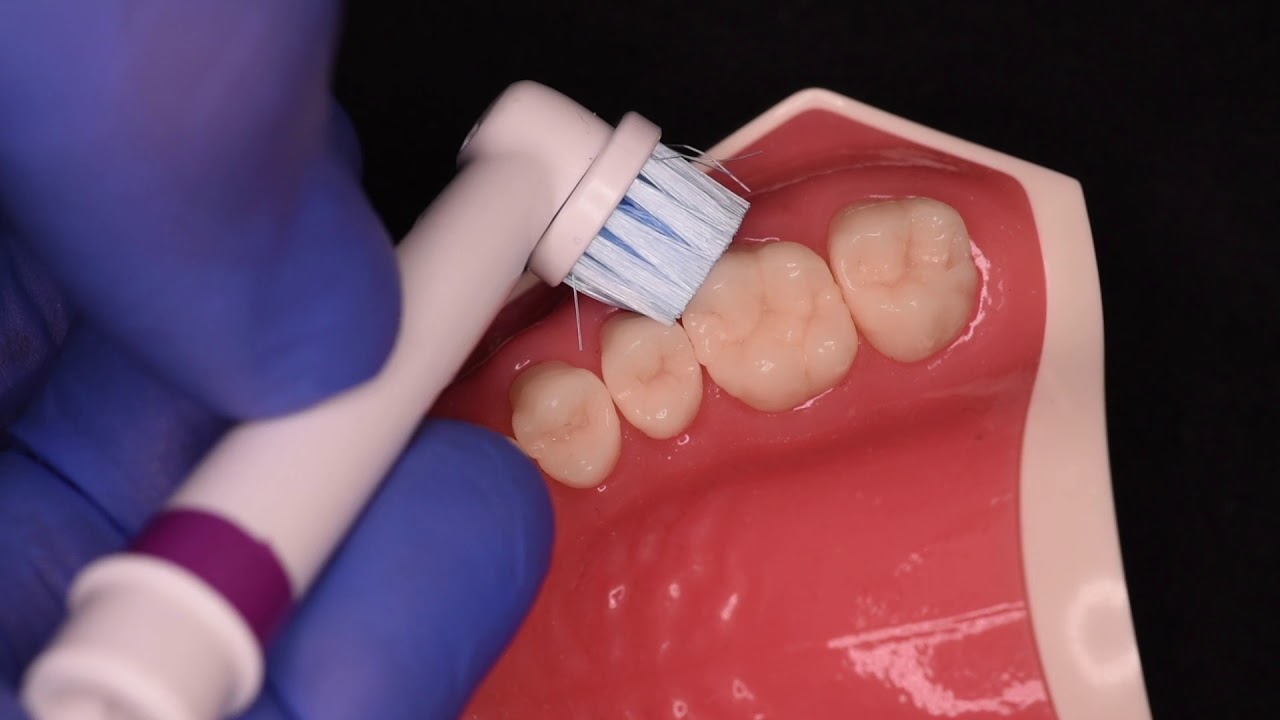
Instructional video on YouTube
Why electric?
An electric toothbrush removes more plaque on average than a manual brush. This is not a marketing claim — it is the result of a Cochrane review of 56 randomised trials involving more than 5,000 participants.
What the research shows: electric brushing leads to 21% less plaque and 11% less gum inflammation after three months compared to manual brushing. A measurable difference is already visible after one to three months.
The technique — different from a manual brush
This is where most people go wrong. They use an electric toothbrush like a manual one: scrubbing back and forth. That is not necessary — and it works less well.
How to do it: Hold the brush at a 45-degree angle against your gum line. Place it on one tooth and let the motor do the work. Move slowly from tooth to tooth — about two seconds per tooth. Do not press; the brush does not need to scrub.
- Always clean the outer surface, inner surface, and chewing surface.
- Brush for two minutes. Divide your mouth into 4 sections: upper left, upper right, lower left, lower right. Brush each section for 30 seconds. You can choose a different order if that works better for you.
What beginners get wrong
Pressing too hard.
Scrubbing harder does not help and can damage gums and enamel over time. Use only light fingertip pressure. Many brushes give a signal when you press too hard.
Scrubbing back and forth like a manual brush.
The motor provides the movement. You just guide the brush slowly along your teeth. That is all there is to it.
Keeping the brush head too long.
Replace it every three months, or sooner if the bristles splay out. A worn head cleans worse than a new manual brush.
Result after two to four weeks: most people notice less bleeding when brushing and a fresher feeling in the mouth. Consistent use reduces plaque build-up on the enamel.
Oscillating or sonic?
There are two main types: oscillating-rotating brushes (such as Oral-B) and sonic brushes (such as Philips Sonicare). Both work well. In meta-analyses, the oscillating type scores slightly better for plaque removal; in daily practice the difference is small.
Choose what feels comfortable in your hand. The brush you use every day is always better than the technically superior one you leave on the shelf.
Not sure about the right technique? Your dentist or dental hygienist can give you a personal demonstration in five minutes.
Scientific sources
- Yaacob M, et al. (2014). Powered versus manual toothbrushing for oral health. Cochrane Database Syst Rev, (6):CD002281. 56 RCTs, 5,068 participants.
- Erbe C, et al. (2022). Efficacy of an oscillating-rotating power toothbrush compared to a sonic power toothbrush: systematic review and meta-analysis. BMC Oral Health, 22:82.
mijngebit.info is not a medical device. If in doubt, consult your dentist.